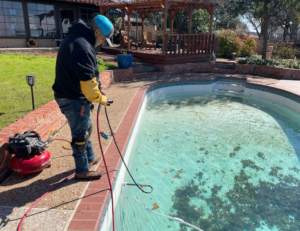
Dealing with a pool leak?
Call us at 214-972-3330 for professional detection and repair
You’ve done the bucket test. Your pool is definitely losing more water than it should. Now what?
At this point, many homeowners face a choice: try to find the leak yourself or call in a professional. Both approaches have their place, and the right answer depends on your situation, the complexity of the leak, and how much time and frustration you’re willing to invest.
Let’s break down what each option actually involves so you can make an informed decision.
What DIY Leak Detection Looks Like
If you’re handy and patient, you can attempt several detection methods at home. Here’s what’s involved:
The Bucket Test (Confirming the Leak)
This is where most people start—and it’s effective for determining whether you have a leak at all:
- Place a bucket on the pool step, filled with pool water to match the pool’s water level
- Mark both water levels (inside and outside the bucket)
- Wait 24-48 hours
- Compare the difference
If the pool lost more water than the bucket, you’ve confirmed a leak. But now you need to find where it is.
Visual Inspection
Walk around your pool and equipment area looking for:
- Wet spots in the yard that shouldn’t be wet
- Cracks in the pool deck, coping, or shell
- Loose tiles or damaged grout
- Corrosion on equipment
- Visible drips or puddles around the pump, filter, or heater
Many equipment-area leaks are visible if you look carefully. Check fittings, valves, O-rings, and pipe connections.
The Dye Test
Once you suspect a specific area, you can use food coloring or leak detection dye to confirm:
- Turn off the pump so the water is still
- Get close to the suspected area (you may need to get in the pool)
- Release a small amount of dye near the suspected crack, fitting, or seam
- Watch carefully—if there’s a leak, the dye will be drawn toward it
This works well for visible cracks, around skimmers, return fittings, lights, and other accessible areas.
Water Level Monitoring
Turn off your auto-fill and let the water level drop naturally. Where the water stops falling can indicate the leak’s location:
- Stops at skimmer level? Check the skimmer throat and faceplate
- Stops at light level? Inspect the light niche and conduit
- Stops at a return fitting? Check that fitting’s seal
- Keeps dropping to the floor? The leak may be in the floor or main drain
Equipment Checks
Inspect the pump, filter, heater, and all visible plumbing for:
- Drips or spray when the system is running
- Moisture around unions and fittings
- Corroded or damaged components
DIY Advantages
- Low cost: Basic supplies like dye, a bucket, and tape cost under $30
- Immediate action: You can start investigating right away
- Simple leaks are findable: Equipment leaks and obvious cracks are often discoverable without special tools
DIY Limitations
- Time-consuming: Finding a leak can take hours or days of trial and error
- Limited to visible/accessible areas: You can’t detect underground plumbing leaks or leaks inside the pool structure
- Risk of misdiagnosis: Without experience, you might fix the wrong thing—or miss the real problem entirely
- Multiple leaks: Pools often have more than one leak. DIY methods might find one and miss others
- Safety concerns: Testing near electrical components (like pool lights) or requiring extended time underwater carries risk
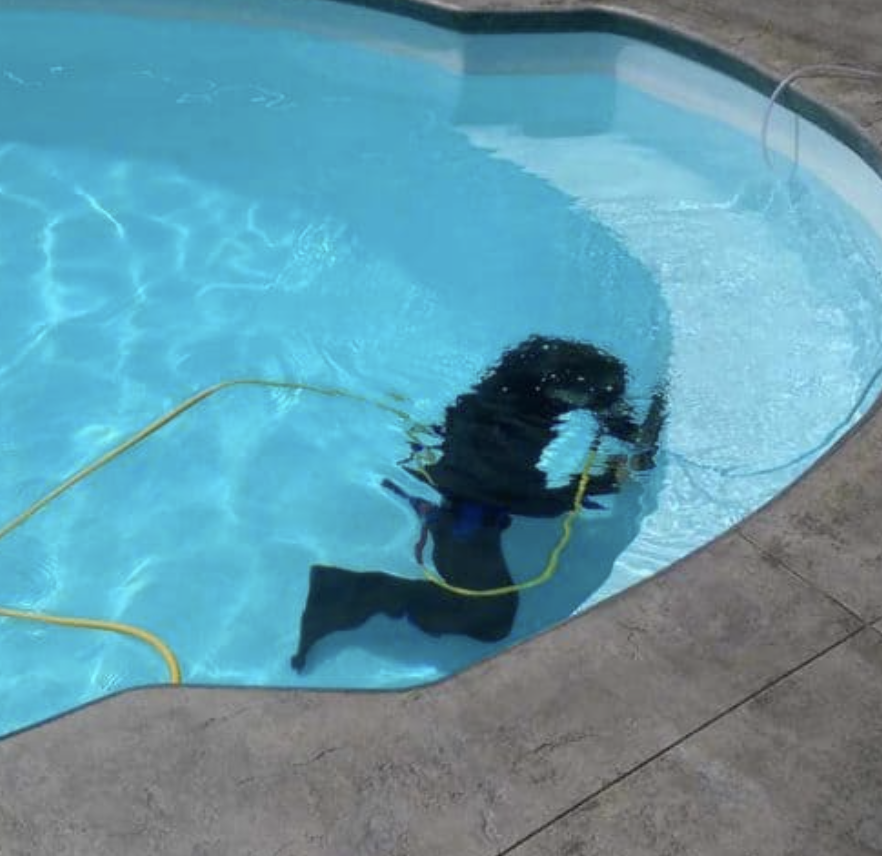
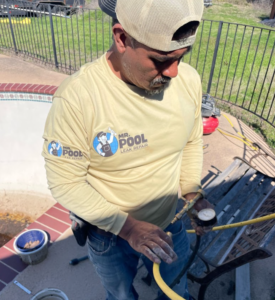
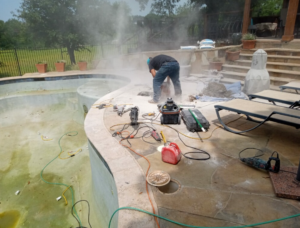
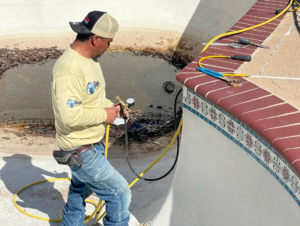
What Professional Leak Detection Looks Like
Professional leak detection is a different experience entirely. Here’s what you’re paying for:
Specialized Equipment
Professionals use tools that simply aren’t practical for homeowners to own:
- Electronic listening devices (hydrophones): Underwater microphones that detect the sound of water escaping through cracks or holes—even tiny ones
- Pipe microphones: Detect leaks inside plumbing lines by amplifying the sound of escaping water
- Pressure testing equipment: Isolates and pressurizes individual plumbing lines to identify which line is leaking
- Helium detection systems: Introduces helium into plumbing and uses sensors to detect where it escapes
- Leak correlation equipment: Pinpoints leak locations in underground pipes
This equipment costs thousands of dollars and requires training to use effectively. A professional can often locate a leak in under an hour that might take a homeowner days to find—if they find it at all.
Systematic Process
Experienced technicians follow a methodical process:
- Interview: Understanding when you first noticed the problem, how much water you’re losing, and any recent changes
- Visual inspection: Checking equipment, deck, coping, and visible pool areas
- Static testing: Pressure testing plumbing lines to isolate the leak to structure vs. plumbing
- Electronic detection: Using listening devices to pinpoint the exact location
- Dye confirmation: Verifying the leak location visually
- Documentation: Providing a detailed report of findings
Professional Advantages
- Accuracy: Advanced equipment finds leaks that DIY methods can’t detect
- Speed: What takes you a weekend might take a pro 45 minutes
- Comprehensive: Professionals find all the leaks, not just the obvious one
- Underground detection: Plumbing leaks buried under concrete are detectable without excavation
- Same-day answers: You know exactly what’s wrong and what it will cost to fix
- Expertise: Technicians have seen hundreds of leaks and know where to look first
- Often includes repair: Companies like Mr. Pool Leak Repair also handle the repairs
When DIY Makes Sense
Consider handling it yourself if:
- The leak appears to be at the equipment (visible dripping from pump, filter, or fittings)
- You can see an obvious crack and want to confirm it with dye
- You’re comfortable working around pool equipment and getting in the water
- You have time and patience for trial and error
- The water loss is minor and you want to monitor before calling someone
When to Call a Professional
Bring in an expert if:
- DIY methods haven’t located the leak
- You’re losing significant water (more than 1/4 inch per day)
- The leak appears to be underground or in the plumbing
- Your pool has multiple suspected leak areas
- The water keeps dropping past visible fittings and fixtures
- You’ve already made repairs that didn’t solve the problem
- The leak is near electrical components (lights, pumps)
- You simply don’t have time to spend on detective work
The Hidden Cost of Guessing Wrong
Here’s something homeowners often overlook: inaccurate detection can cost more than professional service.
If you guess that the skimmer is leaking and pay to have it repaired, but the real leak was in the underground return line, you’ve spent money on an unnecessary repair while the actual problem continues causing damage.
Professional detection typically costs $150-$500. Compare that to:
- Unnecessary repairs: $200-$1,000+
- Continued water loss while troubleshooting: $50-$200/month
- Structural damage from an unaddressed leak: $1,000-$10,000+
- Deck replacement from soil erosion: $5,000-$15,000+
The math often favors paying for accuracy upfront.
A Practical Middle Ground
Many homeowners find success with a combined approach:
- Do the bucket test to confirm a leak exists
- Check equipment for obvious drips or puddles
- Inspect visible areas for cracks or damage
- If you find something obvious, try dye testing to confirm
- If you can’t locate it, or if water loss continues after a repair, call a professional
This approach lets you potentially catch simple problems yourself while recognizing when expert help is needed.
—
Mr. Pool Leak Repair serves Dallas, Plano, Frisco, McKinney, Allen, The Colony, Carrollton, Richardson, Southlake, Fort Worth, and communities throughout the DFW metroplex.
Ready to fix your leak for good?
Call 214-972-3330 or contact us online to schedule your leak detection.