Some of our calls come from people who’ve already been told their pool has to be drained. Sometimes that’s true. Often, though, the pool leak repair they need can be done with the water in, or with the level brought down below the part we’re fixing, so the pool never sits empty. Below I go through the common repairs one by one, including how long we’re usually on site and which written warranty covers each. If you’ve got a drain-and-replaster quote on the kitchen counter, this should help you check it.
From the field · Starwood, Frisco
A family in Starwood, the Whitfields, had been told the pool needed to be drained and replastered. It was losing water every day, and the plaster was old enough that the advice sounded reasonable to them. We started where we always do, with tape at the waterline and a look over the equipment pad, then dye along the skimmers, lights, and returns.
The dye found it at a return fitting on the deep-end wall, where it disappeared into the seam between the fitting and the plaster, and none of the plumbing lines lost pressure. We resealed that fitting from inside the pool with the water in and were packed up that afternoon. If they replaster someday, it’ll be because they want new plaster.
Water In, Water Lowered, or Drained
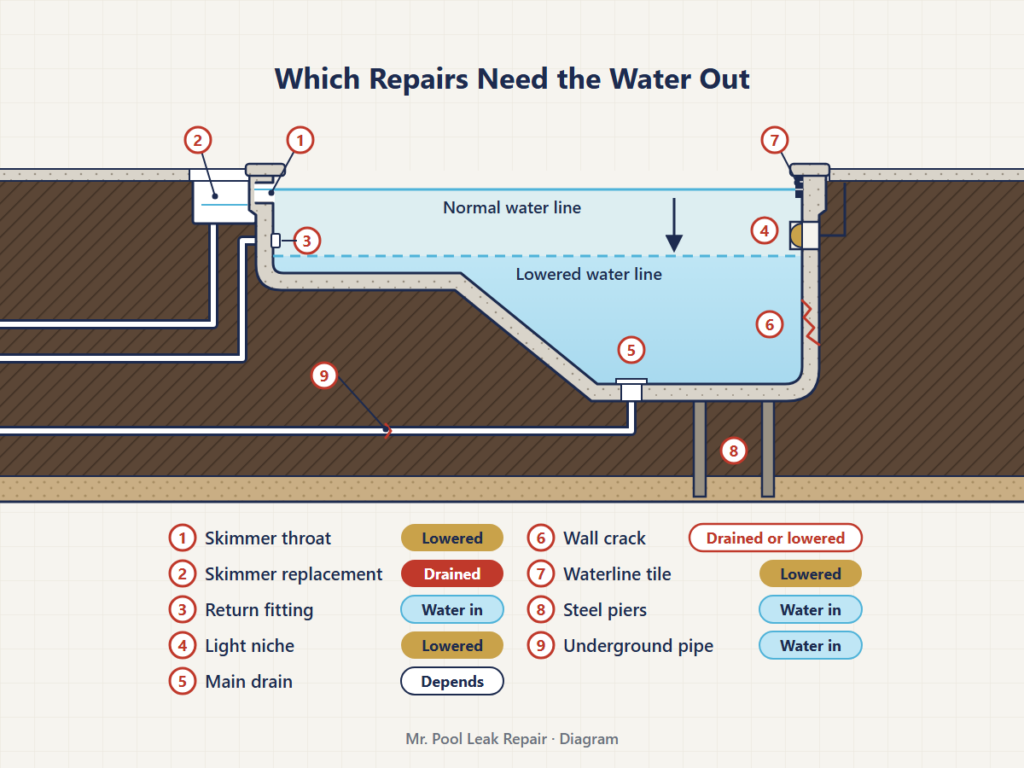
When people hear “drain the pool,” they picture an empty shell and a week of garden hoses. In practice, repairs fall into three groups:
- Water in. Return fittings are the usual example, and underground pipe work happens outside the shell, so the water normally stays in for that too.
- Water lowered. We pump the level down below the part we’re fixing (a skimmer throat, a light niche, the waterline tile) and refill only that much when we’re done.
- Drained. Staple work on a structural crack and a full skimmer replacement are the main jobs where the shell comes empty or close to it.
Many quotes skip past lowering. It saves you a full refill and a fresh round of chemicals, and the shell never sits empty on wet ground.
Which Pool Leak Repairs Need the Water Out
The warranty column comes straight from our written warranty terms, and you get the warranty document when the job’s done. Times on site are what we usually see. Depth and access can stretch them, and you’ll have the plan in writing before we start.
| Repair | Water in or out? | Typical time on site | Written warranty |
|---|---|---|---|
| Skimmer throat or bond-line seal | Lowered below the skimmer opening | One visit | 3-year seal warranty |
| Full skimmer replacement | Drained | Two to three days | 3-year seal warranty on the throat seal, plus the 3-year pipe warranty on any skimmer line section we repair |
| Return fitting | Usually in | Part of a day | 3-year seal warranty |
| Light niche, lens gasket, or conduit fitting | Lowered below the light for most repairs | One visit for most | 3-year seal warranty |
| Main drain cover gasket or sump seal | Depends on which part failed | Varies | 3-year seal warranty on a resealed sump (a shell penetration) |
| Structural crack (staples) | Drained, or lowered below the crack | One visit for the crack, longer if piers are needed | Lifetime structural pier warranty when the crack is foundation-related and repaired with pier work |
| Waterline tile or bond beam | Lowered below the tile line | Depends on how much has let go | Foundation-related bond beam cracks stapled and patched on a pier job fall under the lifetime pier warranty; ask about stand-alone tile work |
| Steel piers | Usually stays in while the piers go in; the crack repair after them needs it down | Two to three days | Lifetime structural pier warranty, with the 5-year full pool leak warranty available as an upgrade |
| Underground pipe | Usually stays in | One to two days | 3-year pipe warranty |
Skimmer Throats and Bond Lines
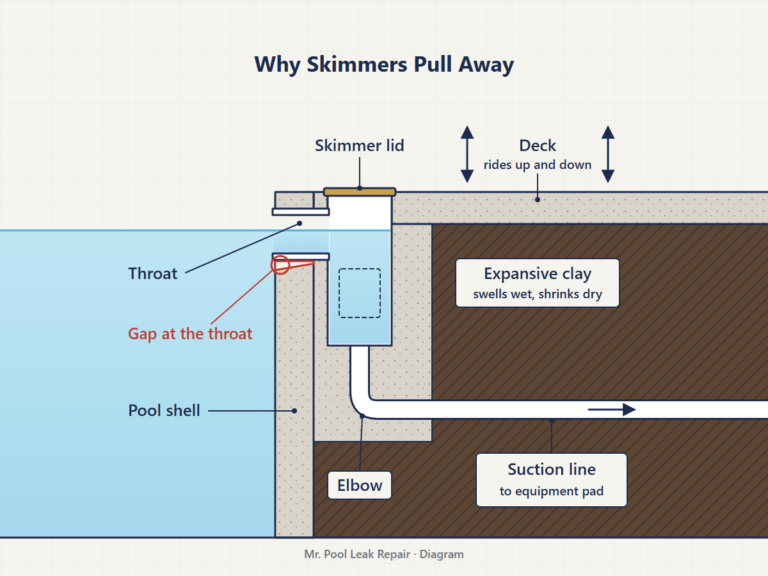
The skimmer is one of the most common places we find a leak. The tell is a pool that keeps dropping to the bottom of the skimmer opening and then holding there. The clay under the deck moves the shell and the plastic skimmer body differently, and the joint between them opens. To fix it, we bring the water down below the skimmer mouth, clean out the failed material, and rebuild the seal with hydraulic cement or an injected sealant, depending on which part let go.
A full replacement is a different animal. The skimmer sits in a block of concrete a few feet down, so the pool comes down while we cut the deck and break out and repour the encasement. That’s why we dye test the throat and pressure test the skimmer line back to the equipment pad before anybody quotes a new skimmer. Most of the time the body is fine and only the throat needs work.
Return Fittings
Return fittings are the jets that push filtered water back into the pool. When the seal where the fitting meets the plaster opens up, the pool keeps losing water through that gap. If the leak is at the fitting and not in the pipe behind it, we fix it from inside the pool without digging. We replace the failed gasket or reseal the fitting, then pressure test the line to make sure nothing else is going on.
If the line drops on the gauge after the fitting’s sealed, the break is underground, and that’s a pipe repair. Our page on return line leaks covers the pattern to watch for: a pool that loses water when the equipment’s running and holds when it’s off.
Pool Light Leaking at the Niche or Conduit
When a pool light is leaking, the fixture itself usually isn’t the problem. Water gets out through one of three places: the lens gasket, the conduit fitting at the back of the niche, or the bond line where the niche meets the shell. If your level keeps settling at the middle of the light, that’s a strong sign the light niche is leaking. Sometimes the first clue is a damp patch near the junction box by the equipment, because water has been running down the conduit.
For most niche repairs we lower the water below the light and pull the fixture. We replace the gasket, seal the conduit fitting or bond line with whatever the gap calls for, and dye test it again before we leave. Any wiring or junction box work goes to a licensed electrician. The fix itself is laid out on our pool light repair page.
Main Drains
A main drain leak usually shows up as a pool that drops past the skimmer and the light and keeps going. We check the cover gasket, the screws that clamp the cover down, and the seal where the drain sump meets the floor. A crack in the floor beside the drain can look the same until dye shows which one is pulling water. Whether the level has to come down depends on which of those failed, so this is one row in the table where we won’t guess before testing.
Cracks, Tile, and the Bond Beam
A leaking structural crack gets staples set into channels cut across it, and that work happens with the pool drained or the water brought down below the crack. Staples alone don’t stop the ground under the pool from moving, and when it keeps moving, the crack tends to reopen right through the new plaster. When a crack is foundation-related, we pair the staples and a plaster patch with steel piers, and a licensed Texas Professional Engineer reviews the plan. That pairing is what the lifetime warranty covers.
Waterline tile and coping work usually means lowering the water below the tile line, not draining. Tile that sounds hollow when you tap it has already let go of the shell behind it. If the cracked tile runs down one side of the pool, or the bond beam behind it is cracked, we check for movement before resetting anything, because tile reset on a beam that’s still moving usually lets go again.
Underground Pipe and Steel Piers
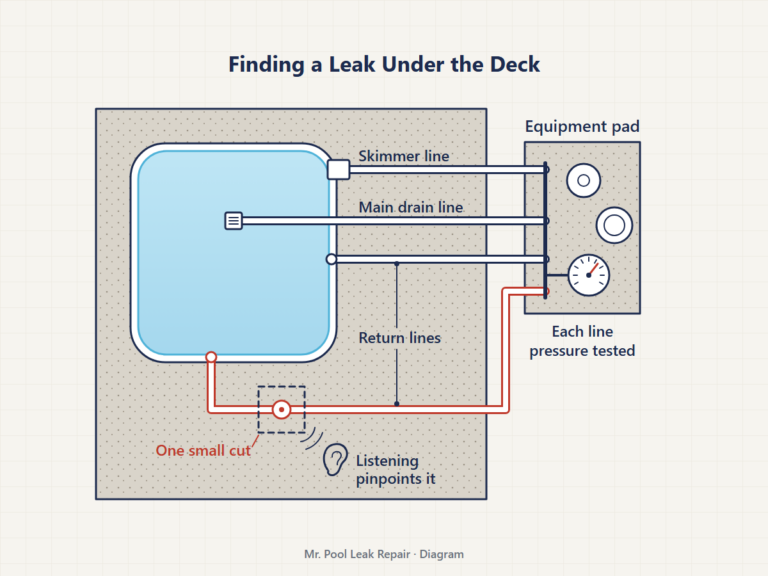
For pipe repairs, we plug each line, put it under pressure, and watch the gauge. When one drops, we follow that line with listening equipment until we hear the break, then cut the deck in that one spot, replace the bad section, pressure test it again, and backfill. If access means the level has to come down some, you’ll hear that before we start.
Steel piers go down to stable ground below the clay that moves. You can see the full list of pool repairs we do if yours isn’t covered here.
Why We Don’t Drain a Pool Just to Take a Look
A full pool’s weight is part of what keeps it seated in the ground. Take that weight away while the soil around it is soaked, and an empty inground pool can be pushed up and out of the ground. The same guide calls heavy rain the worst time to drain one, since ground can look dry on top and still be saturated several feet down. On the Collin County side of Frisco, a lot of pools sit on black clay that swells when it’s wet and shrinks when it dries, and a dry-looking yard there doesn’t tell you much.
Insurance may not help, either. A property insurance law firm notes that pool “pop-up” claims often run into exclusions for groundwater and hydrostatic pressure, earth movement, and settling.
Staple repairs, a full skimmer, and a replaster do need the shell empty or close to it, but that call should come out of a confirmed diagnosis.
Underwater Pool Leak Repair and Why Leak Sealers Usually Don’t Hold
Store-bought pool leak sealer goes in the water and is supposed to find the leak and plug it. One leak sealer’s product page says it’s designed for minor leaks, about an inch a day in a 15,000-gallon pool, and that larger leaks need conventional plumbing or repairs. The leaks that cost people real water tend to be bigger than that, or they’re somewhere a sealer can’t do much:
- Skimmer bond lines on clay that keeps moving. Even if something plugs one in July, the joint shifts again when the ground swells.
- A cracked pipe joint under the deck.
- Any structural crack in a shell that’s still moving.
- Light niches with a worn-out lens gasket, where the real fix is a new gasket.
And if a sealer only slows a leak for a few weeks, water is still soaking the ground under your deck the whole time.
Underwater patching is different. A properly prepped patch can hold with the water in on a small void in the plaster or around a fitting face, but it won’t hold on a joint that’s moving or a crack that runs through the shell.
How Much Does It Cost to Repair a Leak in an Inground Pool?
HomeAdvisor’s cost guide puts in-ground pool leak repair at $350 to $2,700, plus the cost of draining, refilling, and treating the water when the job calls for it. The same guide lists draining for repairs at $180 to $230, and that’s before you’ve paid to refill and rebalance.
Our own repairs average about $2,500. Where yours lands depends on what failed and how deep it is, and on whether any concrete has to be cut and matched. You get a written diagnostic report and repair estimate the same day, before any work starts.
Before Anyone Drains Your Pool
If someone has told you to drain, ask which part failed and how they confirmed it before you agree. A good answer names a specific fitting the dye pulled into or a line that wouldn’t hold pressure. The age of the pool, by itself, doesn’t tell anybody where the water’s going.
If you’re not sure there’s a leak yet, run the 24-Hour Tape Test first. With the autofill off, put a strip of tape at the water line, mark the level, and add no water for 24 hours before you check it. A summer day can take about a quarter inch to evaporation. If yours dropped more than that, you likely have a leak. Call us then, before you pour in a sealer or let anyone pull the water out. If you’re in Frisco, the Frisco pool leak detection page has the local number.
Frequently Asked Questions
Can you fix a pool leak without draining the pool?
Many leaks can be fixed with the water in or with the level lowered. Return fittings are often sealed at full level, and underground pipe work happens outside the shell. Skimmer throats, light niches, and waterline tile need the level brought down below the part being fixed, which is a partial drain at most. Staple repairs on structural cracks and full skimmer replacements are the main jobs that need the pool emptied or close to it.
What is the best sealant for pool light conduit?
The sealant matters less than finding where the water’s getting in. A light can leak at the lens gasket, the conduit fitting at the back of the niche, or the bond line around the niche, and each takes a different fix. A failed lens gasket gets replaced, not sealed over. The conduit fitting and bond line get a sealant or epoxy matched to the gap, after a dye test shows which spot is pulling water.
Is water inside my pool light a leak?
Water inside the light housing is a fixture problem. On its own, it doesn’t mean the pool is losing water. The pool loses water when it gets out through the niche: past the lens gasket, into the conduit, or around the bond line where the niche meets the shell. If your level keeps settling at the middle of the light, get all three spots dye tested. Don’t pull the fixture yourself, since it’s tied to the conduit and wiring.
How long does pool leak repair take?
A seal repair on a return fitting, skimmer throat, or light niche is usually one visit. Underground pipe repairs usually take one to two days, depending on how deep the pipe is and how much deck has to be restored. Steel pier jobs and full skimmer replacements run two to three days. You’ll get the timeline in writing with your estimate.
Dealing with a pool leak?
Call today to find out how we can help you stop your pool from leaking.
Mr. Pool Leak Repair serves Dallas, Plano, Frisco, McKinney, Allen, Southlake, Fort Worth, and communities throughout the DFW metroplex.